
Hitachi MISS System
Signalling Staff Training and Technical Currency with Hitachi MISS
Develop signalling capability through controlled, practical and scenario-based learning.
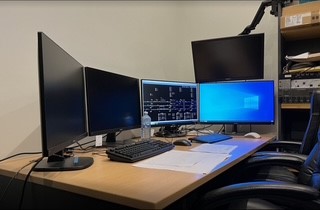
MW Engineers operates the Hitachi Microlok Interlocking Simulation System (MISS), providing rail organisations with a controlled environment for staff training, technical currency, project preparation and signalling system investigation.
MISS allows signalling personnel to observe and interact with simulated Microlok II application logic without working on operational infrastructure. Normal operation, equipment failures and unusual combinations of inputs can be examined safely, repeatedly and at a pace that supports effective learning.
MISS Technical Currency and Training Program
Experienced signalling personnel may be competent in their roles but have limited opportunities to practise responses to uncommon faults, degraded conditions or complex commissioning situations. MISS provides a practical way to keep this knowledge current between projects and reinforce the disciplined thinking required in safety-critical work.
Training and refresher activities can be developed for:
- signalling designers and application engineers
- testers and testing engineers
- Testers in Charge and commissioning personnel
- signalling maintainers and fault-finding staff
- graduates and developing signalling personnel
- experienced staff returning to Microlok-based project work
The program can support structured familiarisation, supervised practice, refresher activity, mentoring and continuing technical development. Sessions can be tailored to the participant's role, experience, project environment and the learning outcomes established by their employer or competent trainer.
Realistic Scenario-Based Learning
MISS can be used to develop scenarios involving:
- equipment and input failures
- incorrect or unexpected indications
- loss of train detection
- points, route and signal control anomalies
- level crossing warning-time and sequencing problems
- altered working and degraded operating conditions
- testing and commissioning anomalies
- unusual combinations of system inputs
- systematic fault-finding and evidence collection
Scenarios can be paused, repeated and varied so participants can examine cause and effect, test assumptions and understand how the interlocking responds. A competent trainer can observe the participant's approach, question their reasoning and conduct a structured debrief after each exercise.
This reflects the rail industry's increasing emphasis on structured practical learning, regular refresher activity and scenario-based training for safety-critical personnel. ONRSR guidance on train-detection systems specifically highlights scenario-based training, practical refresher activity, mentorship and ongoing documented development.
Training Supports Competency&Does Not Replace It
MISS training is not presented as automatic evidence that a person is competent to perform a rail safety role.
The employer, authorised competency system and appropriately qualified trainer or assessor remain responsible for defining the required competency, approving the learning activities, observing performance and deciding whether the available evidence is sufficient.
MW Engineers provides the simulation platform, technical support and scenario-development capability. Participation, observations, debrief outcomes and completed activities can be documented in a format agreed with the client to support its training and competency management processes.
A Collaborative Training Model
MW Engineers works in partnership with each client rather than imposing a standard course. The client can provide its own trainer, assessor, procedures and project-specific learning objectives, while MW Engineers configures and supports the simulation environment.
Where additional expertise is required, MW Engineers can draw upon experienced signalling trainers, testers, designers and specialist consultants to form a project-specific delivery team. This flexible model allows an organisation to access the right expertise for a defined program without replacing its internal technical leadership or training framework.
Project Testing and Commissioning Preparation
In addition to staff development, MISS can support project teams with:
- offline examination of Microlok II application logic
- early identification and investigation of application issues
- development and rehearsal of testing strategies
- route, fail-safe and fault-response simulation
- commissioning preparation and team familiarisation
- technical demonstrations and stakeholder walkthroughs
- controlled reproduction of faults or unexpected system behaviour
Using simulation before site activities can improve team preparation, strengthen understanding of system behaviour and help reduce avoidable pressure during limited commissioning windows. Any formal verification, validation or testing outcomes remain subject to the applicable client, network and project assurance requirements.
Who Can Use the MISS Capability?
The system provides its most direct technical value to organisations working with Microlok II applications. It can also assist broader signalling development by demonstrating interlocking principles, testing discipline, fault analysis and scenario-based decision-making, provided the limitations of the simulated platform are understood.
Discuss a MISS Training or Simulation Program
MW Engineers can support a single familiarisation session, a project-specific workshop or an ongoing technical currency program developed around your people, systems and operational risks.
Email: sales@mwengineers.com.au
Phone: (03) 9314 6399